Ask who is coming.
Player count, reading comfort and energy matter more than the size of the box.
Original tabletop ideas · Australian evenings
A few good rules. A table full of different people. The best part happens somewhere between your first move and “one more round”.

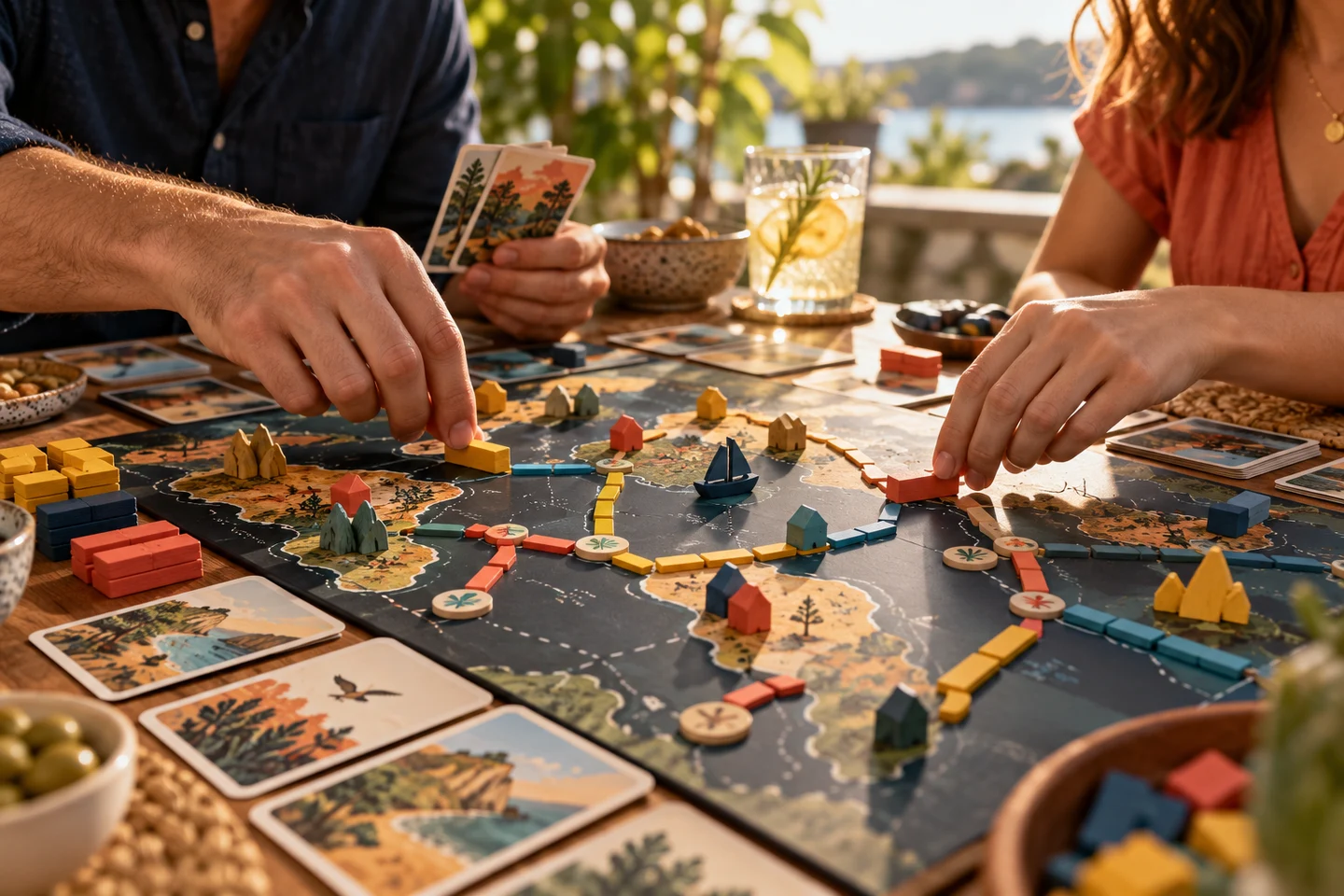
Player count, reading comfort and energy matter more than the size of the box.
Explain the goal, play one open turn and let the first round be practice.
A short game gives the table an easy way to change pace.
Choose the mood

Begin with Colour Courier or One More Word. Their turns give everyone a small contribution, and the story is usually more memorable than the score. Keep the first explanation short and offer an easy pass.

Pocket Orchard and Last Seat reward a small plan without needing a long teach. Show one example of scoring before the first proper round, then let players discover their own approach.

Common Ground and The Shared Map make the conversation part of the game. Invite quieter players to explain a thought, and resist solving someone else’s turn for them.
The Gremulaxi collection
Pass a colour clue around the table without naming the colour. The last guess decides whether the whole courier chain scores.
Learn the courier roundBuild a tiny orchard from shared paper tiles. Matching neighbours are valuable, but a varied final row can change the result.
Plant a first orchard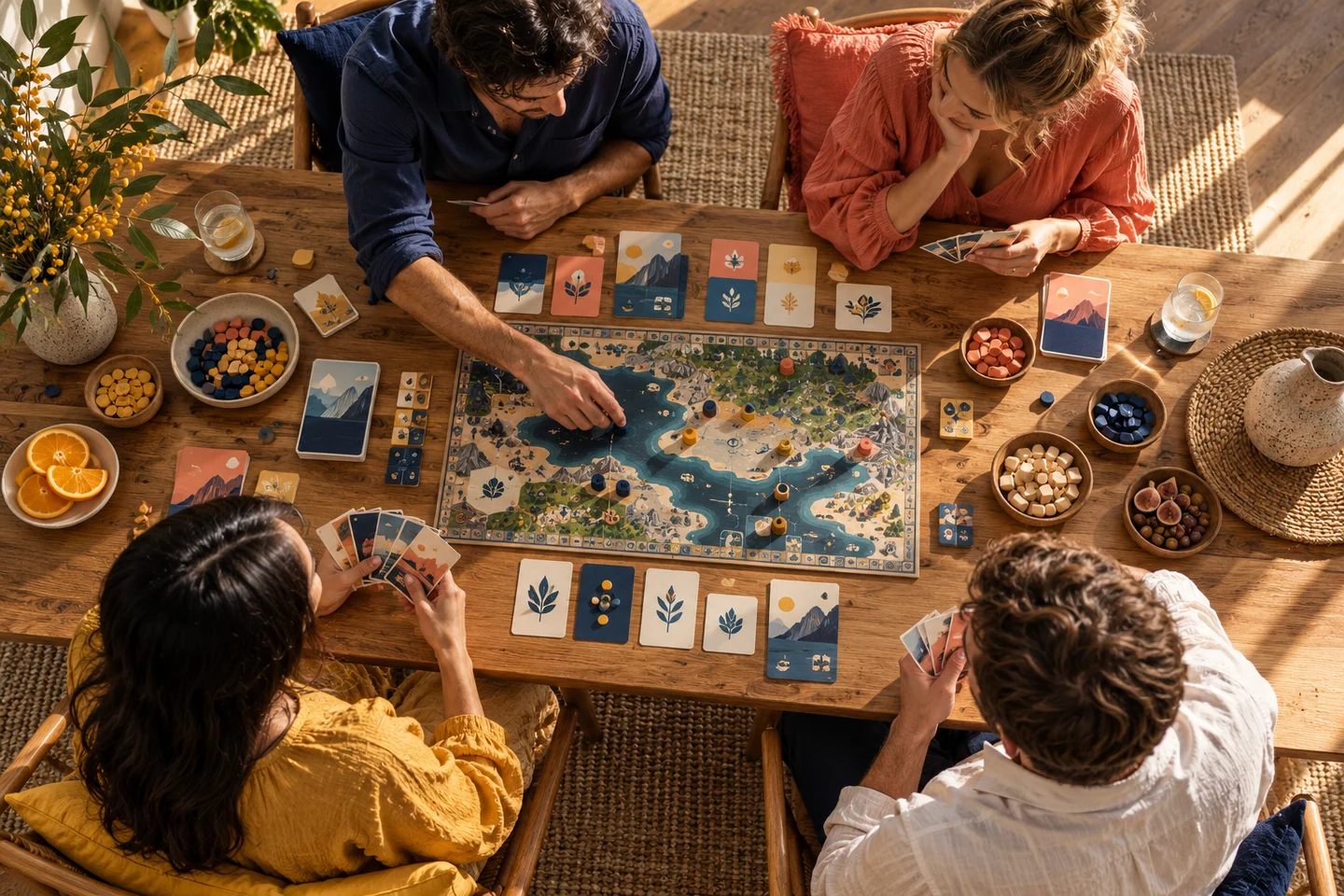
Find the word that connects two unlikely prompts. The group succeeds when it can explain a link everyone understands.
Find your common ground
Spend your numbered cards to claim places in a row. High values help now; a carefully held low card can finish a sequence later.
See the seating puzzle
Build a ridiculous sentence one word at a time. Remembering the whole thing is a shared challenge, not a speed test.
Start a sentenceDraw a route together while each person protects a different landmark. A finished map needs everyone’s priorities to fit.
Draw the shared routeNo game fits those words yet. Clear the search and try another table style.
A better way to explain
Start with how the game ends. Demonstrate one ordinary turn. Explain an unusual rule when it becomes relevant, and keep the reference page within reach.
Read the host field notesPeople before the score
Read a card aloud if someone asks. Use words alongside colour, keep score visible and agree whether a timer adds fun or pressure. A small adjustment can make a big difference.
Let people watch before joining, change partners or take a break. Nobody should need to explain a personal reason for choosing a different pace.
The practical kit
The original mini-games here use everyday materials. Coins can become counters, paper squares can become tiles, and a shared sheet can keep the score where everyone can see it.
Agree on symbols as well as colours so that the pieces remain distinguishable across the table.

The host’s pocket list
Keep this host list on your device. It is preparation for your own evening, not an event registration.
Device-only checklist.Good table moments

The house-rule notebook
Try a smaller hand, a shared score or an untimed round. Make sure everyone understands what is different.
A house rule needs a fair test. Avoid changing it mid-round because one person is winning.
Ask whether the change made choices clearer, turns smoother or the experience more welcoming. The answer can be different next week.
Before the next round
No. This collection contains original small game concepts and hosting notes. It is not a ranked shopping list or an affiliate catalogue.
The rules describe ordinary paper, pencils and counters. You can adapt the materials you already have, provided every player can tell the pieces apart.
For your own table, agree a variation before starting and make sure everyone understands it. If you share a useful improvement, describe exactly what changed.
No events or tickets are sold here. The contact form stores a note for review and returns a reference after saving.
Pull up a chair